Kansas City Small Multifamily Investing Guide
July 16, 2026
July 16, 2026
Buying a small multi-family property in Kansas City can be a smart way to build income, lower your housing costs, or add to a growing portfolio. It can also get complicated fast if you rely on broad advice instead of local facts. If you are considering a duplex, triplex, or fourplex, you need to understand how Kansas City classifies these properties, what local compliance rules apply, and how to evaluate rent, condition, and financing with clear eyes. Let’s dive in.
Small multi-family properties often attract two types of buyers. You may be looking for a place to live in one unit while renting the others, or you may be focused on income from all units. In either case, these properties can offer flexibility that a single-family rental usually does not.
In Kansas City, that flexibility comes with location-specific differences. Rent potential, property condition, zoning status, and city compliance can vary a lot from one block or ZIP code to another. That is why a strong purchase decision starts with local due diligence, not just a quick cap rate estimate.
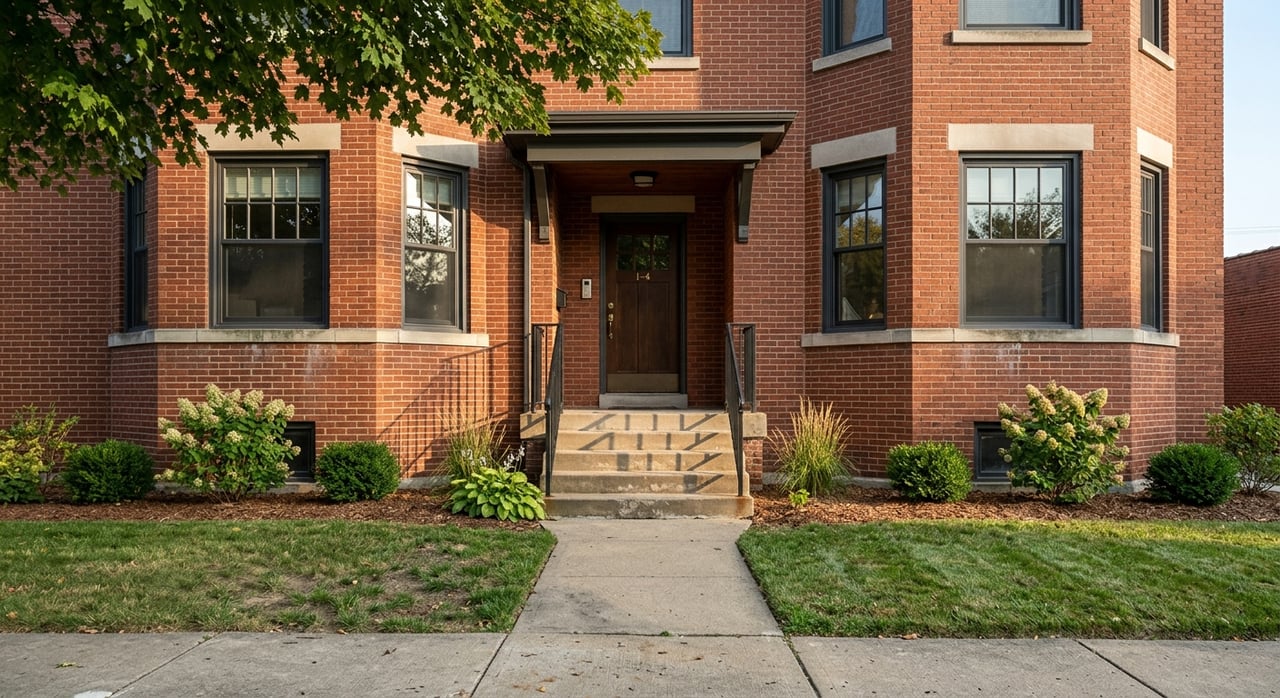
Kansas City uses legal terms that do not always match the language you see in listings. In the zoning code, a duplex is called a two-unit house, and buildings with 3 to 8 units on one lot are called multi-unit houses. A two-unit house may be side-by-side or split across separate floors, and some multi-unit houses may look like a large detached home from the street.
For most buyers, the practical listing terms will still be duplex, triplex, or fourplex. Still, the legal classification matters when you start checking zoning, permitted use, and whether the building is fully conforming on its lot. A property with the right number of units can still raise issues if its zoning status or site conditions do not line up with current city rules.
Before you get too far into a Kansas City multi-family purchase, confirm the zoning and any special overlays tied to the property. The city recommends using its official Parcel Viewer to verify zoning and to identify area-plan or historic-district overlays. That extra step matters because older duplexes and small apartment houses may sit in areas with additional review requirements.
If you are planning updates after closing, zoning matters even more. Kansas City notes that one- and two-family construction follows the residential permit process, while other multi-family residential work goes through the commercial permit process. That can affect your timeline, renovation budget, and the level of review needed before work begins.
One of the biggest local surprises for buyers is Kansas City’s rental registration system. The city requires rental property owners to register through the Healthy Homes Rental Inspection Program. As of 2026, permits run from January 1 through December 31, with an annual fee of $25 per unit plus a one-time $25 application fee.
The city says owners must submit a completed application with supporting documents before opening a new rental or after a change in ownership or management. In other words, compliance is part of your operating plan from the start. It is not something to figure out months after closing.
There is also an important owner-occupant nuance. Under city code, a duplex with one owner-occupied unit is not considered rental property for this definition. If you plan to live in one side of a duplex, your compliance setup may be different from a buyer purchasing a fully leased building, so it is worth confirming how the city will classify the property based on actual occupancy.
If the building is vacant, your due diligence should go a step further. Kansas City requires vacant or foreclosed housing units to be registered annually between December 1 and January 31. Newly vacant properties must be registered within 90 days, and foreclosed properties within 14 days.
This is especially important if you are buying a value-add property that will sit empty during repairs or lease-up. A vacant building can create extra cost, paperwork, and timeline pressure. It can also change your early cash flow assumptions if units cannot be rented immediately.
One of the easiest mistakes in multi-family investing is using a citywide rent assumption for a property that lives in a very specific micro-market. In Kansas City, rent potential can vary sharply by ZIP code. HUD’s FY2026 small-area Fair Market Rents show just how wide that spread can be.
For example, in ZIP code 64127, the small-area Fair Market Rent is $940 for a 1-bedroom, $1,070 for a 2-bedroom, and $1,660 for a 4-bedroom. In 64108, those figures rise to $1,640 for a 1-bedroom, $1,860 for a 2-bedroom, and $2,880 for a 4-bedroom. The takeaway is simple: a Kansas City address matters as much as the unit mix.
That does not mean Fair Market Rent should replace local comparable rentals. It does mean these figures can serve as a useful benchmark when you are testing whether the seller’s numbers feel realistic. If projected rent is based on hope rather than actual market support, the deal can look better on paper than it will perform in real life.
While duplexes and fourplexes need property-specific analysis, the larger rental market can still provide helpful context. In Cushman & Wakefield’s Q1 2026 Kansas City multifamily report, the market-wide vacancy rate was 4.5%, average effective rent was $1.49 per square foot, and year-over-year effective rent growth was 3.2%. That suggests the broader rental market remained relatively stable in early 2026.
You should still be careful about applying large-apartment trends directly to a small property. A neighborhood duplex does not lease the same way a large managed complex does. But broader market data can help you understand whether your assumptions fit a stable market, a softening market, or one with stronger rent momentum.
When you tour a small multi-family property, do not think about condition only as a renovation question. Think about it as an operating question. Deferred maintenance, habitability issues, or incomplete repairs can delay occupancy, affect compliance, and reduce cash flow right when you need the property to perform.
This is especially important for systems and safety-related concerns. If units are not ready to lease, your rental timeline slips. If issues trigger city compliance problems, your costs can rise before income catches up.
A practical review should include:
If you plan to live in one unit, owner-occupant financing may be available. HUD says FHA loans can be used for 1-4 unit properties and may require as little as 3.5% down in many cases. That makes house hacking a real option for some Kansas City buyers.
What matters just as much is how your lender will treat projected rent from the other units. For 2-4 unit properties, lender rules around rental income documentation can materially affect how much you qualify for and how the property is underwritten.
Before you write an offer, ask your lender:
Fannie Mae requires the income approach in valuing two-unit to four-unit properties, and both Fannie Mae and Freddie Mac outline documentation rules for rental income on these homes. That means clean leases, accurate rent rolls, and realistic market rents are not just helpful. They can directly shape your financing outcome.
Property taxes can change your numbers more than many buyers expect. In Missouri, residential real property is assessed at 19% of true value according to the Missouri State Tax Commission. Jackson County also notes that residential valuations can differ from market value, and assessment appeals focus on market value, not the tax rate itself.
If you are buying a property with vacancy, deferred maintenance, or a major rehab plan, it makes sense to review the tax picture early with a tax professional. A property that looks affordable based on current taxes may look different if the assessed value changes after purchase or improvements.
If you expect to appeal an assessment in Jackson County, the Board of Equalization materials note that appeals may rely on records such as:
That is one more reason to keep your records organized from day one.
If you want to buy with fewer surprises, focus on the local items that most often affect performance after closing. A small multi-family property can work well when the legal, physical, and financial pieces all line up.
Before closing, make sure you have reviewed:
Buying a duplex, triplex, or fourplex in Kansas City can be a strong move if you approach it with local knowledge and disciplined underwriting. The best opportunities are not always the ones with the highest advertised rents or the lowest list price. Often, the smarter purchase is the property where zoning, condition, compliance, rent potential, and financing all make sense together.
If you are comparing options, it helps to have an advisor who can look beyond the listing sheet and help you weigh the full picture. A principal-led strategy can be especially valuable when you are balancing owner-occupant goals, investment returns, renovation plans, and neighborhood-specific rent assumptions.
If you are considering buying a small multi-family property in Kansas City and want a thoughtful, data-backed approach, connect with Tiffany Dow for a principal-level conversation about your goals and next steps.
Stay up to date on the latest real estate trends.


At the Paulson-Dow Group, our clients come first. We provide honest, professional service grounded in integrity every step of the way. Let’s partner together today!