What Lee's Summit Sellers Aren't Required to Disclose, and Why It Rarely Stays Hidden
August 13, 2026
August 13, 2026
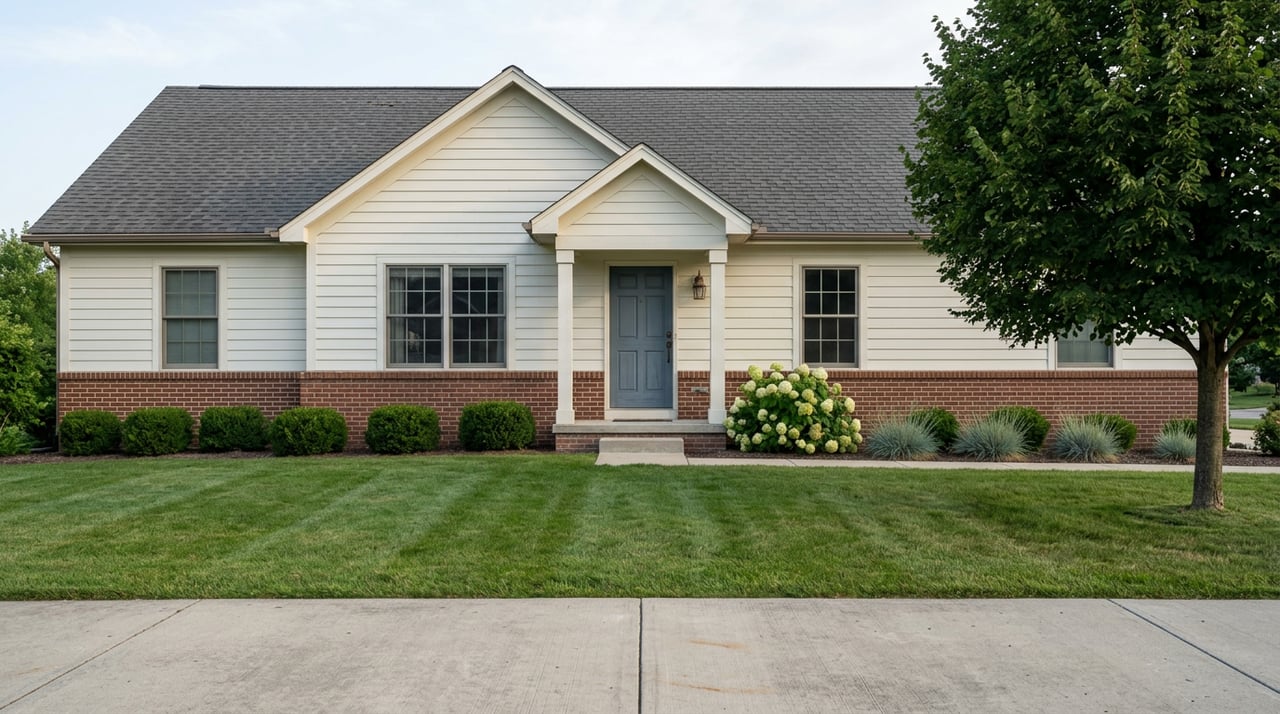
On June 11, 2026, a home inspector spent the morning in the Parkwood at Stoney Creek subdivision, running a full inspection, a termite check, and a radon test on an occupied 23-year-old home. Weeks earlier, the same inspection company had been out to a 27-year-old townhome in the Condos of Oaks Ridge Meadows for a sewer scope, and to new construction in Pryor Ridge for a standard pre-closing walkthrough. Three properties, three ages, three very different sets of questions waiting to surface once the camera or the radon monitor started running.
None of what those inspections might have found was something the seller was legally obligated to volunteer in advance. Missouri does not require a standard disclosure form. It runs on a "buyer beware" principle, and most of what a seller has to say fits on a page. That sounds like an advantage if you are getting ready to list a home in Lee's Summit. In practice, the things Missouri law doesn't make you disclose are frequently the exact things a Lee's Summit transaction surfaces anyway, just later, and usually at a worse moment for negotiating leverage.
Missouri sits in caveat emptor territory. There is no statute compelling most home sellers to complete and hand over a disclosure statement before a sale closes. The obligations that do exist are narrow and specific. Sellers must disclose if a property was used to manufacture methamphetamine, under Missouri Revised Statute 442.606, and federal law requires a lead-based paint disclosure for any home built before 1978. That is close to the full list of things state law affirmatively makes you say.
The law also goes out of its way to say what you don't have to disclose. Under Missouri Revised Statute 442.600, a property's history as what the statute calls "psychologically impacted real property" is explicitly not a material fact a seller has to reveal, and no legal action can be brought against a seller or agent for staying silent on it.
None of this means silence is free everywhere. Missouri's Merchandising Practices Act still prohibits concealing or misrepresenting a material fact once you're asked about it directly, and courts have held that a seller who actively hides a known defect, like termite damage serious enough that a beam won't hold, can still face a fraud claim even without a checklist requiring the disclosure. The Missouri Association of Realtors publishes a voluntary disclosure form most sellers use anyway, not because the law demands it, but because skipping it tends to invite more questions than it avoids.
So the legal floor is genuinely low. The transaction floor is not, and that gap is where two Lee's Summit specific issues live.
Lee's Summit has homes dating from every decade since the 1880s, and the sewer line material buried under each one tracks roughly with when the home was built. Downtown properties often still run on original clay tile. Post-war neighborhoods tend to have cast iron. Anything built after 1980 is more likely PVC. A local plumbing contractor working across the city put it plainly: three different pipe materials, three different failure patterns, and all three still active under Lee's Summit streets today.
Clay tile is the one that matters most for older-core sellers. Lee's Summit sits on clay soil that expands and contracts with freeze-thaw cycles, and that movement is exactly what opens joints in aging clay pipe. One local inspection firm has been direct about the consequence: a full inspection on a home built before 1985 should include a sewer scope as close to standard practice, because a cracked or root-infiltrated line is common enough in that age bracket to expect rather than hope against. When a line does need replacing, the average cost runs well over $7,500, before accounting for tree removal or difficult access. A camera inspection alone typically runs $200 to $400.
None of that is a disclosure requirement. A seller who has never had a backup or a slow drain has nothing they're obligated to say, because they don't know anything to say. But a buyer's inspector in 2026 is far more likely to run that camera than one was ten years ago, and a $7,500 repair discovered during an option period changes a negotiation in ways a pre-listing sewer scope would not have. The seller who commissions their own scope before listing isn't disclosing more than the law requires. They're finding out what the buyer's inspector is about to find out anyway, on their own schedule instead of the buyer's.
Lee's Summit spans two counties, Jackson and Cass, and for most of the city's history that split was a footnote. It stopped being a footnote in 2023, when Jackson County's property reassessment triggered more than 54,000 appeals across the county, testimony that new construction hadn't been accounted for, and parcels that had simply gone missing from the assessment rolls. The city of Lee's Summit sued the county over the fallout, arguing it had lost revenue when Jackson County cut off the city's ability to collect payments at City Hall. In May 2025, a Cass County judge, brought in because every Jackson County judge had recused, ruled in the city's favor and ordered Jackson County to pay Lee's Summit $259,137.08 plus interest.
That history is not ancient. It is the reason property tax bills on the Jackson County side of Lee's Summit carry more uncertainty than a comparable home's list price would suggest. Current data shows the median effective property tax rate across Lee's Summit runs 1.36 percent, above both the Missouri state median of 1.25 percent and the national median of 1.02 percent, but that rate is not uniform inside the city. Homes in the 64064 ZIP code carry a median effective rate of 1.43 percent, while 64086 sits at 1.36 percent. The median annual tax bill citywide is $4,152, but that figure hides a real spread: the 25th percentile bill is $3,139, the 75th percentile is $5,686, and the 90th percentile reaches $7,115. ZIP code 64082 carries the highest median bill in the city at $5,213, while 64063 carries the lowest at $3,182. This year's formal appeal window for property owners who believe their assessment is too high closed July 13, 2026.
A seller has no legal duty to explain any of this to a buyer. It isn't a defect, it isn't hazardous, and it doesn't fit the narrow list of things Missouri statute compels you to say. But a buyer's lender will pull the actual tax bill during underwriting, not the citywide median, and if that number lands meaningfully higher than what the buyer assumed from browsing comparable list prices, it becomes a conversation that happens during the transaction instead of before it. A seller who already knows their parcel's assessment history, including whether it was affected by the 2023 dispute or adjusted since, walks into that conversation prepared instead of surprised alongside the buyer.
The disclosure form is a legal floor, not a transaction strategy. Treating it as the whole job is how sellers end up renegotiating price or timeline over something a little advance work would have already answered. Before listing a Lee's Summit home, it's worth doing three things the law doesn't require but the transaction rewards:
None of these steps change what Missouri law obligates you to say. They change how much control you have over when a fact surfaces and who's holding it when it does.
Does Missouri require a seller to get a home inspection before listing? No. Missouri does not require sellers to commission an inspection, and a seller generally isn't expected to investigate for hidden problems they don't already know about. A buyer's lender may still require a termite inspection, which is standard on FHA and VA loans regardless of what the seller discloses.
If my property tax bill changes after I sell, is that something I have to warn the buyer about? No. Reassessment after a sale isn't a disclosure item under Missouri law. It's worth mentioning anyway if you know your parcel's assessment has a recent or unusual history, since it affects the buyer's monthly payment more directly than it affects yours.
I already had a sewer scope done and it found a problem. Do I have to share that report? Yes, once you know about a defect, staying silent about it while a buyer asks direct questions can expose you to a misrepresentation claim even without a form requiring the disclosure. Once you know, the caveat emptor protection stops covering you on that specific issue.
Selling a home in a city that spans two counties, three generations of sewer infrastructure, and a still-recent property tax dispute takes more than a disclosure form filled out correctly. It takes knowing which questions the transaction is going to ask before the buyer's inspector or lender asks them for you. That's the kind of groundwork Paulson / Dow does with every Lee's Summit listing, from the pre-listing walkthrough to the closing table. If you're weighing a sale and want a clear-eyed read on what your specific property and parcel are carrying, request a principal consultation and we'll walk through it together.
Stay up to date on the latest real estate trends.





At the Paulson-Dow Group, our clients come first. We provide honest, professional service grounded in integrity every step of the way. Let’s partner together today!